The Gambler's Fallacy: Why You're Wrong About 'Due' Outcomes
On 18 August 1913, in the Casino de Monte-Carlo, a roulette wheel landed on black. Then black again. And again. By the time the ball had landed on black for the fifteenth consecutive time, a crowd had gathered around the table.
They were betting on red. Frantically. Surely, they reasoned, red was due.
The ball landed on black. Then black. Then black again. By the twentieth black in a row, players were emptying their wallets onto the red. The streak finally ended at twenty-six consecutive blacks — a sequence so improbable (roughly 1 in 67 million) that it has its own Wikipedia entry. The casino made an absolute fortune that night, primarily from people convinced that the wheel owed them red.
This is the gambler's fallacy: the deeply intuitive but completely wrong belief that past random outcomes change the probability of future ones. It's one of the most expensive mistakes in cognitive psychology — and once you learn to spot it, you'll see it everywhere from casino floors to stock markets to your own decision-making.
What Is the Gambler's Fallacy?
The gambler's fallacy is the belief that if a particular random event has occurred more or less frequently than expected in the past, it is more or less likely to occur in the future — when in fact the events are independent and the probability hasn't changed at all.
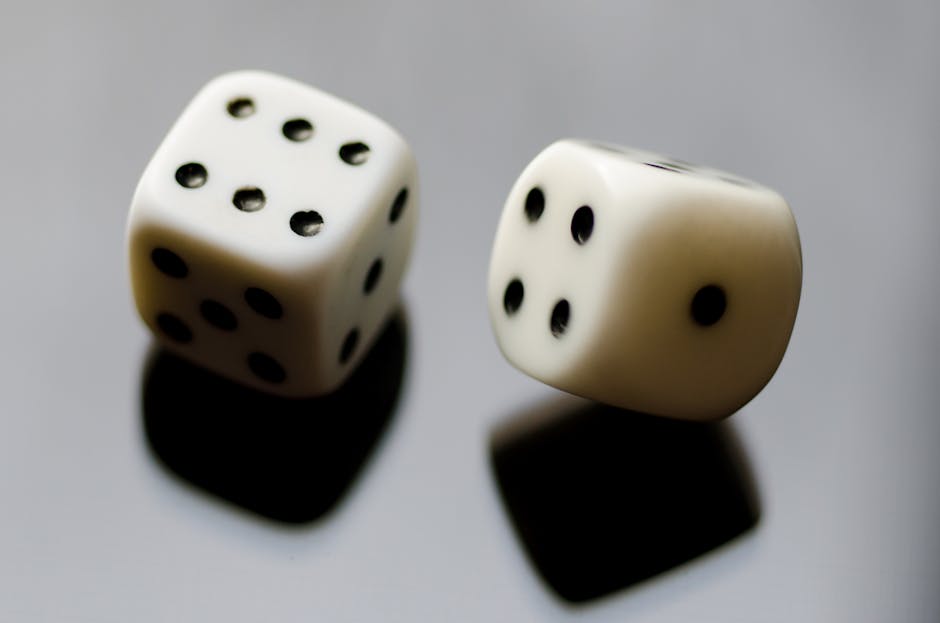
The key word is independent. An event is independent when its outcome doesn't affect the next outcome. A roulette wheel has no memory. A fair coin has no memory. A fair die has no memory. They don't keep count of past spins or flips and adjust their behaviour to balance things out.
A few canonical examples:
- Coin flips: If a fair coin lands heads ten times in a row, the next flip is still 50/50. The coin doesn't owe you tails.
- Roulette: After ten reds in a row, the wheel is no more likely to land black on the next spin than it was on the first spin (still 18/37 on a European wheel, ignoring the green zero).
- Lottery numbers: Numbers that haven't come up in months aren't 'overdue.' Each draw is independent.
- Births: If a couple has four daughters in a row, their fifth child is no more likely to be a son than any other child.
Why Our Brains Get This So Wrong
If the math is so simple, why does the gambler's fallacy feel so obviously true? Several deep features of human cognition are conspiring against us.
The Law of Large Numbers gets misapplied. The mathematical Law of Large Numbers states that as the number of trials grows very large, the observed frequency converges toward the true probability. Flip a coin a million times, you'll get very close to 50% heads. This is true. What people implicitly assume — incorrectly — is that this convergence happens through short-term correction. They believe the universe is actively rebalancing the books, that a streak of heads must be 'corrected' by tails. It isn't. Convergence happens through dilution: each new flip is so small a contribution to the cumulative percentage that streaks get drowned out by sheer volume, not cancelled out.
Pattern recognition is over-tuned. Our brains evolved to detect patterns in noisy environments — that rustling in the grass might be a predator, that arrangement of clouds might mean rain. False positives (seeing a pattern where none exists) were cheap. False negatives (missing a real pattern) were expensive. We are descendants of the over-pattern-matchers. This serves us well in many contexts but is catastrophic in genuinely random environments, where there are no patterns to find but our brain insists on finding them anyway.
Representativeness heuristic. Daniel Kahneman and Amos Tversky famously showed that people judge probability by how 'representative' a sequence looks. People asked to write down a 'random' sequence of coin flips will produce sequences with far too many alternations (HTHTH...) because that looks random. A real random sequence frequently produces clusters of three, four, five identical outcomes — but those don't feel random, so we expect them to correct themselves. They don't.
Local representativeness. A particularly insidious version: we expect even small samples to look like the underlying probability. If a coin is 50/50, we expect any run of 6 flips to contain about 3 heads. So when we see HHHHHH, our brain screams 'this is wrong, it must correct.' But small samples genuinely vary — and the gambler's fallacy is what happens when we treat that variation as a debt that must be repaid.
How Casinos Exploit the Gambler's Fallacy
Casinos understand this bias intimately. Walk past any roulette table in Las Vegas, Macau, or Monte Carlo and you'll see an electronic display board listing the last 10-20 results. Why? Officially: 'so players can see the action.' Actually: because players who see five blacks in a row are statistically far more likely to bet heavily on red — and that bet is no better than any other bet. The display is a profit-maximising tool dressed as transparency.
The same logic explains why casinos display roulette history but not slot machine history (slot machines are not technically independent in the same way, but their outcomes are still essentially random per spin). Anywhere you see a 'last results' board, ask yourself: who benefits from showing me this?
A real number to anchor on. A European roulette wheel gives the casino a 2.7% house edge on every spin. Whether you bet on red, black, a single number, a column, or any combination, the expected value is the same: you lose 2.7% of your stake on average. The previous outcomes change nothing. A streak of five reds doesn't make the next spin a better bet. It's still -2.7% expected value, every spin, forever.
This is also why 'progressive betting systems' like the Martingale (double your bet after every loss) eventually destroy bankrolls. The Martingale assumes that a long losing streak must be corrected — that a win is mathematically due. It isn't. Streaks of any length are possible, and even a modest losing streak can hit table limits or empty your account before the 'correction' arrives. Many gamblers have learned this the hard way.
The Gambler's Fallacy in Sports Betting
Sports betting is genuinely different from roulette in one important way: the outcomes are not perfectly independent. Skill, fitness, momentum, weather, and matchups all contribute to results. A team really can be on a roll. A striker really can be in form.
But this is also where it gets dangerous, because the gambler's fallacy mutates into something subtler. Bettors switch between two contradictory beliefs — sometimes within a single conversation:
- 'They've won five in a row, they're due to lose' (gambler's fallacy)
- 'They've won five in a row, they're on fire' (hot-hand fallacy)
Which one is right? Sometimes neither. Often, the streak is being driven by factors the bettor isn't tracking — favourable fixtures, an injury return, an opposition slump — and the streak ends when those factors change, not because of any cosmic balancing act.
The practical lesson: in sports markets, do not bet on or against streaks based on the streak alone. The bookmakers have already priced in any genuine momentum effect. If you think a team is overrated because they're 'due' a loss, your only edge is if your model of why they'll lose is more accurate than the market's. The streak itself isn't the edge.
The Hot-Hand Fallacy: A Twist in the Tale
The hot-hand fallacy is the gambler's fallacy's mirror image: the belief that a string of successes makes future success more likely. A basketball player who's hit four shots in a row is 'hot' — pass them the ball.
For decades, the academic consensus was that the hot hand was a pure illusion — pattern-matching on randomness. A famous 1985 study by Gilovich, Vallone, and Tversky analysed Philadelphia 76ers shooting data and found no evidence of streakiness beyond random chance.
But here's the twist: in 2015, economists Joshua Miller and Adam Sanjurjo found a subtle statistical bias in how those original studies counted streaks. When you correct for it, the hot hand actually exists in basketball — players who've made several shots in a row do have a slightly elevated probability of making the next one. The effect is small (a few percentage points), but it's real.
The correction is technical (it's called Miller-Sanjurjo bias and applies to any analysis of finite sequences), but the broader lesson is more interesting: real-world processes that involve human skill can have momentum, while purely random processes (roulette, lottery, dice) cannot. The mistake is applying the wrong model to the wrong situation.
Practical rule: before reasoning about streaks, ask whether the underlying process is genuinely independent (coins, dice, slot machines) or whether it involves skill, fatigue, or context (sports, business performance, market timing). The cognitive errors look identical, but the corrections are different.
The Fallacy Outside the Casino
The gambler's fallacy doesn't stay in casinos. It contaminates decisions far away from any table.
Investing. Investors regularly believe a stock that's fallen for several days is 'due' a bounce, or that a fund that's outperformed for years is 'due' a drop. Sometimes mean reversion is real (valuation does pull prices back over long horizons), but often the streak is driven by underlying changes in the company or market — and 'reverting to the mean' through pure timing is a coin flip with extra steps.
Hiring. Interview panels who've seen three weak candidates in a row become more lenient with the fourth. Logically, the fourth candidate's quality is independent of the others. Practically, fatigue and the desire to find someone — anyone — bias the assessment. This is the gambler's fallacy plus motivated reasoning, and it's everywhere in recruitment.
Medical decisions. A doctor who's diagnosed five flu cases in a row may be slightly more likely to dismiss the sixth patient's atypical symptoms as 'probably flu.' The base rate of flu hasn't changed, but their recent run has shifted their priors in a non-evidence-based way.
Childbirth and family planning. Couples with three children of the same sex sometimes report believing the fourth is 'bound to be different.' It isn't. Each conception is roughly independent, ~50/50.
Lottery players. People who track 'overdue' numbers and play them disproportionately. Lottery balls have no memory. The expected value of every ticket is identical (and negative).
How to Avoid the Gambler's Fallacy
Knowing about the gambler's fallacy is not enough — most people who can recite the textbook definition still fall for it in practice. A few practical techniques actually help:
Ask whether the events are genuinely independent. This is the single most useful habit. Before reasoning about a streak, explicitly ask: does the outcome of event A change the probability of event B? If the answer is no (coins, dice, lotteries, well-shuffled cards), the streak is meaningless. If the answer is yes (sports, market dynamics, skill-based games), reason about the underlying mechanisms, not the streak.
Quantify, don't intuit. When you find yourself thinking 'X is due,' write down the actual probability. After ten consecutive heads, the probability of another head is 50%. Writing it down forces the system 2 part of your brain to engage.
Recognise the words. 'Due,' 'overdue,' 'on a streak,' 'cold,' 'on a run,' 'about to break,' 'has to balance out' — these phrases are red flags. When you hear them (or say them), pause.
Distrust your sense of randomness. Genuinely random sequences produce more clustering than people expect. If a streak feels suspiciously long, it probably isn't — six heads in a row will happen roughly 1 in 64 times, which means you'll see it occasionally if you flip enough coins.
Keep a decision log. Write down predictions before outcomes happen. Keeping yourself honest with a track record exposes how often your 'due' instincts are wrong. (We cover the discipline of calibration training in more depth elsewhere — it's the single best protection against this and most other biases.)
Know that knowing isn't enough. The most surprising research on cognitive biases is that awareness of a bias doesn't reliably eliminate it — including in people who study them professionally. The defence is structural: rules of thumb, decision frameworks, and pre-committed processes that don't rely on you spotting the bias in the moment.
Connecting It to Better Decision-Making
The gambler's fallacy belongs to a family of biases that share a common root: our discomfort with genuine randomness. Closely related are:
- Base rate neglect — ignoring underlying probabilities when specific information feels more vivid
- Sunk cost fallacy — letting past investments distort future decisions
- Hot-hand thinking — the streak-believing twin of the gambler's fallacy
- Hindsight bias — believing past random outcomes were predictable all along
If there's a single skill that protects against all of these, it's thinking in probabilities rather than certainties. People who internalise probabilistic thinking don't ask 'will this happen?' They ask 'how likely is this to happen, what would change my estimate, and how much should I act on a given probability?'
That shift — from binary, narrative thinking to graded, probabilistic thinking — is the foundation of every reliable framework for making decisions under uncertainty, from expected value calculations to Kelly criterion bet sizing to Bayesian updating. The gambler's fallacy is what happens when narrative thinking ('the streak must end') replaces probabilistic thinking ('the next event has its own probability, independent of the streak').
Is the gambler's fallacy ever correct?
How is the gambler's fallacy different from regression to the mean?
Why do casinos display recent results if the games are random?
Does the gambler's fallacy apply to the stock market?
Can I train myself out of the gambler's fallacy?
Want to think more clearly about probability?
Read our deeper guide to thinking in probabilities — the foundation of better decision-making under uncertainty.