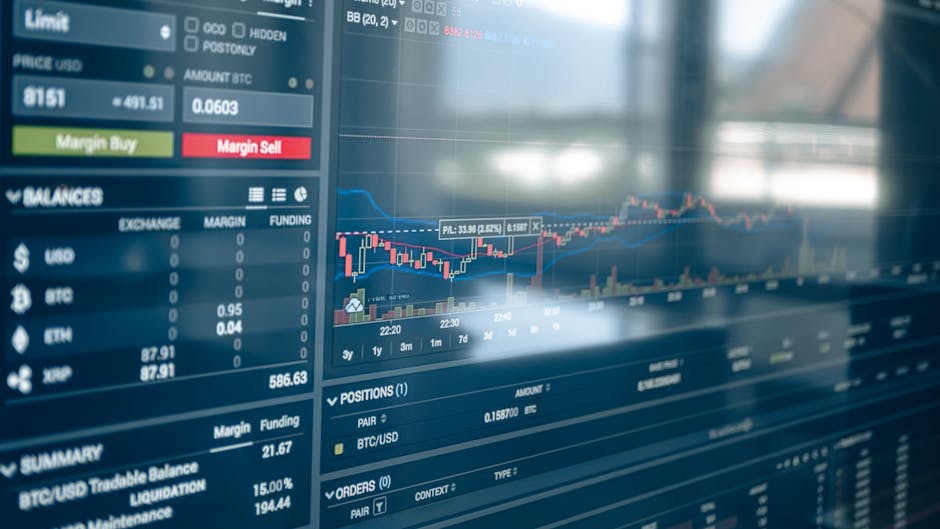
How Prediction Markets Work — Probability Meets Money
Prediction markets turn questions about the future into tradeable contracts whose prices behave like probabilities. Here is how they work, why they are surprisingly accurate, where they fall short, and how to use them as an input to your own decisions.
How Prediction Markets Work
When probability meets money: contracts that pay out on real-world events, and why their prices keep beating the experts.
Prediction markets are exchanges where people trade contracts that pay out based on whether real-world events happen. A typical contract pays $1 if the event occurs and $0 if it does not. The current price — somewhere between $0 and $1 — is the market's collective estimate of the probability.
If you understand expected value, you already understand most of what makes these markets tick. A contract trading at $0.62 implies the market thinks there is a 62% chance of the event happening. If you believe the true probability is 70%, buying "Yes" at $0.62 has a positive expected value of $0.08 per contract. That is the entire game, scaled up.
This guide is for readers who already think in probabilities. We will skip the popular-science explanations and get to the parts that matter: how the prices form, what the platforms actually offer, where the track record is genuinely impressive, where it falls apart, and how to use markets as an input to your own decisions. UK readers — there are some important caveats for you, which we will get to.
If the relationship between price and probability still feels foreign, our guide to probability vs odds walks through how decimal, fractional and American odds map onto exactly this kind of implied-probability thinking.
What a Prediction Market Contract Actually Is
Binary payouts and the price-as-probability mapping
A prediction market contract is a binary option on a future event. The simplest form looks like this:
- Question: "Will the Federal Reserve cut rates by July 2026?"
- Yes contract: pays $1 if true at resolution, $0 if false.
- No contract: pays $1 if false, $0 if true.
- By construction, price(Yes) + price(No) = $1 (modulo small fees and friction).
If the Yes contract is trading at $0.43, the market is implicitly saying there is a 43% probability of the cut. Buy 100 Yes contracts at $0.43 and you have spent $43. If the event happens, you receive $100, a $57 gain. If it does not, you receive $0, a $43 loss.
This is mathematically identical to an even-money bet at decimal odds of 1/0.43 ≈ 2.33. The two formats are interchangeable; prediction markets just present the probability directly. For readers comfortable with expected value calculations, the EV of buying at $0.43 when you believe the true probability is p is simply: EV = (p × $1) − $0.43. Positive whenever p > 0.43.
Why Prices Behave Like Probabilities
Arbitrage, the wisdom of crowds, and a touch of efficient-market theory
There are three independent reasons prediction market prices tend to track real probabilities.
1. Arbitrage forces consistency. If "Trump wins" trades at $0.55 and "Trump loses" trades at $0.50, the sum is $1.05. A trader can sell both sides, lock in a $0.05 risk-free profit per pair, and the prices must converge until that opportunity disappears. The same logic applies across related contracts: if "Republican wins presidency" trades higher than the sum of all individual Republican candidates, arbitrageurs will compress the gap.
2. Informed traders push prices toward truth. Anyone with a genuine information edge is incentivised to trade until the price reflects what they know. If you know something the market does not, you can extract money from people who are wrong. This is the same mechanism that supposedly keeps stock markets near fair value.
3. Diverse opinions average out noise. Even when individual traders are biased or poorly informed, their errors often cancel. This is the wisdom of crowds effect — the average of many independent estimates is usually closer to the truth than any single estimate.
None of this means prices are exactly right. It means they are usually a better starting point than your gut, and often better than expert opinion. Importantly, the same forces that keep stock prices roughly efficient apply here, with one big asterisk: prediction markets are far smaller and thinner, so the efficiency is weaker.
The Major Platforms
Where you can actually trade these contracts in 2025
The landscape has consolidated rapidly over the last few years. Five platforms cover almost everything most people need to know about. Their differences matter — particularly which ones accept real money, which accept which nationalities, and how they resolve disputes.
| Feature | Best Overall Polymarket ★★★★★ 4.6 | Kalshi ★★★★☆ 4.4 | PredictIt ★★★★☆ 3.6 | Manifold ★★★★☆ 4.2 | Metaculus ★★★★☆ 4.3 |
|---|---|---|---|---|---|
| Price | — | — | — | — | — |
| Rating | 4.6/5 | 4.4/5 | 3.6/5 | 4.2/5 | 4.3/5 |
| Type | Crypto-based real-money exchange | CFTC-regulated US exchange | Academic-research exchange | Play-money market | Forecasting community |
| Settlement | USDC stablecoin | USD | USD (capped at $850 per market) | Mana (no cash value) | Reputation points only |
| US users | Restricted (regulatory) | Yes (regulated) | Yes (limited) | ✓ | ✓ |
| UK users | Possible but legally grey | ✗ | ✗ | ✓ | ✓ |
| Liquidity | Highest of the real-money venues | Strong on flagship contracts | Thin, often distorted prices | Very high breadth, thin per market | N/A — aggregated forecasts |
Polymarket: The Liquidity Leader
Polymarket is built on the Polygon blockchain and settles in USDC, a US dollar stablecoin. It hosts most of the largest-volume contracts in the world: presidential elections, Fed decisions, geopolitical events, sports, and longer-tail prediction questions. Liquidity is concentrated in the headline contracts — you can move six-figure positions in major election markets with limited slippage.
The catch is regulatory. Polymarket settled with the CFTC in 2022 and formally restricts US users; in practice, US-based traders sometimes use VPNs, which is against the terms of service and creates real legal risk. UK users sit in a grey area: trading on a non-FCA-regulated overseas crypto-settled venue is not explicitly illegal for retail users, but it is not protected and any earnings would still be liable for UK tax.
Kalshi: The Regulated US Option
Kalshi is the only CFTC-regulated prediction market exchange operating in the US. It runs as a Designated Contract Market under the same regulatory regime as commodity futures exchanges. That means real US dollar settlement, federally regulated custodians, and clear tax treatment.
Kalshi's contract menu is more conservative than Polymarket's — it had to fight long legal battles for the right to list event contracts on US elections, and as of 2025 court decisions have generally favoured the exchange. The flagship economic and political contracts have decent liquidity, but obscure questions can be very thin. Kalshi does not currently accept UK retail customers.
For US-based readers who want to trade real money on prediction markets without regulatory risk, Kalshi is effectively the only legitimate venue.
PredictIt: Academic Roots, Capped Stakes
PredictIt is run as a research project by Victoria University of Wellington under a CFTC no-action letter. It caps each user at $850 per market and charges a 5% fee on profits plus a 5% withdrawal fee. The combination of small caps and high fees means prices can drift noticeably from fair value — a 2-3% mispricing can persist because the arbitrage profit does not justify the friction.
For researchers and individual traders willing to live with thin contracts, PredictIt remains a useful sandbox. For anyone trying to trade size, the caps make it impractical.
Manifold and Metaculus: Forecasting Without Money
Manifold is a play-money prediction market — users trade with "mana" that has no cash value (with limited charity-redemption mechanics). What it lacks in financial stakes it makes up for in breadth: thousands of active markets covering everything from AI benchmarks to neighbourhood gossip.
Metaculus is structurally different. It is not a market at all but a forecasting tournament where users submit probability estimates that aggregate into a community forecast. Forecasters are scored on accuracy over time, building reputation. The platform has produced striking calibration data: over thousands of resolved questions, the community forecast tends to be well-calibrated, meaning events forecast at 70% happen roughly 70% of the time.
Neither platform offers real-money trades, but both produce probability estimates that are cited by serious researchers and journalists. They are excellent for learning to forecast without putting money at risk.
The Track Record
How well do prediction markets actually predict?
The honest answer is quite well, with caveats. The strongest evidence comes from elections, where prediction markets have a long history of being compared head-to-head with polls and pundits.
Iowa Electronic Markets, run by the University of Iowa since 1988, demonstrated that small real-money markets often outperformed national polls in the final week of US presidential elections. A widely cited Berg, Forsythe, Nelson and Rietz paper found that IEM prices beat polls 74% of the time across multiple election cycles.
More recently, Polymarket's 2024 US election markets were closer to the actual outcome than nearly all major polling aggregators in the days before voting. The market priced Trump's win at roughly 60% on election eve while polls had the race at a coin-flip. This is one data point, not proof — but it is consistent with a wider pattern of markets outperforming pollsters in tight races.
Metaculus publishes calibration plots showing the community forecast is broadly well-calibrated across thousands of questions, though it tends to be slightly underconfident on extreme probabilities (95% predictions happen closer to 90%, etc.). Tetlock's Good Judgement Project demonstrated that small teams of trained "superforecasters" — using techniques very similar to market participants — outperformed intelligence-community analysts with classified information.
Where Prediction Markets Fall Short
The limitations every user needs to internalise
If you treat prediction market prices as gospel, you will get burned. The honest weaknesses are:
Thin liquidity in long-tail markets. A market with $5,000 of total volume can be moved by a single retail trader. The price reflects whatever opinions happen to have shown up, not a deep equilibrium. Always check volume and order-book depth before reading much into a price.
Long-shot bias. Just like in horse racing, low-probability outcomes (sub-5% or sub-10%) tend to be systematically overpriced. Traders pay a premium for the chance at a big payoff. If you are an EV-driven trader, this is where the most reliable edge tends to live — selling the long shots, not buying them.
Resolution ambiguity. Markets pay out based on a defined resolution criterion, and ambiguous criteria create disputes. Polymarket's resolution mechanism (UMA's optimistic oracle) has been challenged on several high-stakes markets. Always read the resolution criteria carefully — "Will Russia invade Ukraine in 2024?" sounds simple until you ask "what counts as an invasion?".
Manipulation risk on small markets. A trader with deep pockets can push thin-market prices around for short periods, especially near close. There have been documented cases of suspected manipulation around political markets — though prices typically snap back as arbitrageurs arrive.
Sample-size problems on rare events. Prediction markets are excellent at the headline questions because there is decades of data on elections, sports and macro events. They are much weaker at one-off, novel questions where neither the traders nor the platforms have base rates to anchor on. This is closely related to base rate neglect — without good base rates, neither humans nor markets do well.
Legal status varies by jurisdiction. US users are restricted on most non-Kalshi platforms. UK users have no fully regulated equivalent (more on this below). Tax treatment is unclear in most jurisdictions and may shift as regulators catch up.
Prediction Markets vs Sports Bookmaker Odds
The same maths in different clothing
Sports betting odds and prediction market prices are mathematically equivalent — both encode an implied probability — but the structure is different. A traditional sportsbook sets the odds and takes the other side of every bet, building in a margin (the "vig" or "overround") so the implied probabilities sum to more than 100%.
A betting exchange is far closer to a prediction market. Smarkets and Betfair Exchange in the UK are exactly this: peer-to-peer markets where users back and lay outcomes against each other, and the exchange charges a small commission on net winnings instead of building margin into the price. The lay/back prices on Betfair Exchange are the closest legitimate equivalent UK readers have to a Polymarket-style prediction market.
The practical implications:
- A Betfair Exchange back price of 2.50 implies probability 1/2.50 = 40%, identical to a Polymarket Yes contract at $0.40.
- Exchange commissions (typically 2-5% on net winnings) are economically similar to a slightly worse fill on a prediction market.
- Exchanges support a much narrower question set — mostly sports, sometimes politics — but for those questions the liquidity is often deeper than non-sport prediction markets.
If you want to apply prediction-market thinking from the UK without the legal greyness of Polymarket, Betfair Exchange and Smarkets are the practical answer.
How to Actually Use Prediction Markets
Three sensible use cases for an EV-minded reader
Most readers should not try to make a living trading prediction markets. The realistic uses are more mundane and more valuable.
1. As a probability source for your own decisions. When you need to estimate the chance of a macro event — a recession, an election outcome, a geopolitical development — the relevant prediction market gives you a starting probability calibrated by people with money on the line. Use it the way you would use a base rate.
2. As a forecasting tool. Submitting forecasts to Manifold or Metaculus, or simulating trades in real markets, is one of the best ways to develop calibration. Track your predictions over time and compare to actual outcomes. The discipline of writing down a probability before the event happens — and being scored on it — exposes biases you did not know you had. This is essentially Bayesian thinking in practice.
3. As occasional positive-EV trades. If you have genuine information or analysis that the market lacks, prediction markets give you a way to monetise it. The bar is high — you need to be confidently right where the market is wrong, and you need enough liquidity to size the bet meaningfully. The same logic that governs position sizing in any edge-based strategy applies here: even with a real edge, betting too much can blow you up.
Worked Example: An EV Trade on a Hypothetical Market
Imagine a Polymarket contract: "Will the Bank of England cut rates at the November meeting?" The Yes contract is trading at $0.30. You have read the latest MPC minutes carefully, know two of the dovish committee members publicly favour a cut, and your model puts the probability at 45%.
Setting up the EV calculation:
- Market price (implied probability): 30%
- Your estimated probability: 45%
- Cost per Yes contract: $0.30
- Payout if correct: $1.00
- Payout if wrong: $0.00
EV per contract = (0.45 × $1.00) + (0.55 × $0.00) − $0.30 = $0.15
That is a 50% expected return on the dollars at risk, which sounds great. But translate it into a Kelly-style position size before celebrating.
The Kelly fraction for a binary bet is: f = (bp − q) / b*, where b is the net odds (here, $0.70 of profit per $0.30 staked, so b = 0.70/0.30 ≈ 2.33), p is your probability of winning (0.45), and q is the probability of losing (0.55).
f = (2.33 × 0.45 − 0.55) / 2.33 = (1.05 − 0.55) / 2.33 ≈ 0.21*
Full Kelly says stake 21% of your bankroll on this single trade. Most experienced traders use fractional Kelly — typically a quarter to a half — to absorb the inevitable miscalibration in your probability estimate. Quarter Kelly here is about 5% of bankroll. That is a reasonable size for a single market view, and it acknowledges that your 45% might really be 38%. EV thinking only works if you stay around long enough for the maths to play out, which means sizing positions so that you survive being wrong several times in a row.
The 2025 Context
How the landscape changed in the last election cycle
The 2024 US election cycle was a watershed moment for prediction markets. Polymarket's election volume reached unprecedented levels, with cumulative volume across major political contracts running into the billions of dollars over the year. Across the broader crypto-prediction-market space, total market capitalisation is reported to have reached approximately $64 billion at peak — though these figures vary by source and should be treated as rough orders of magnitude rather than precise statistics.
The regulatory picture also moved. Kalshi's long fight with the CFTC over event contracts produced favourable court rulings in 2024-2025, broadly establishing that CFTC-regulated event contracts on elections can be offered legally to US retail. Polymarket's restrictions on US users remain, but the wider regulatory hostility appears to be softening.
For traders, the practical takeaway is that real-money prediction markets are now a permanent and growing part of the financial landscape, not a fringe curiosity. Liquidity is deep enough on flagship contracts that the prices genuinely matter for forecasting purposes. For UK readers in particular, the world has not changed much: Polymarket remains accessible but unregulated, Kalshi is unavailable, and the betting exchanges remain the cleanest legal route to similar trades.
Frequently Asked Questions
Are prediction market prices actually probabilities?
Can UK residents legally use Polymarket?
Why do prediction markets often beat polls in elections?
What is the difference between Polymarket and Kalshi?
How is a prediction market different from a betting exchange like Betfair?
Should I expect to make money trading prediction markets?
Are prediction market winnings taxable in the UK?
Why are low-probability outcomes systematically overpriced?
Putting It All Together
Prediction markets are the cleanest real-world demonstration of probability as price. A contract trading at $0.62 is not someone's opinion — it is the equilibrium of thousands of traders putting money behind their beliefs. That makes prediction market prices one of the better starting points for thinking about any uncertain future event.
Use them the way a probabilistic thinker should: as a base rate to reason from, not a final answer. When the market and your model disagree, the burden of proof is on your model. When they agree, you have a useful sanity check. When the market is illiquid or the resolution criterion is fuzzy, discount the price accordingly.
For UK readers, the practical playbook is: read Polymarket and Manifold for the prices, use Betfair Exchange or Smarkets when you actually want to trade, and submit forecasts to Metaculus or Manifold to develop your calibration. None of these venues will make you rich, but together they form one of the best decision-making and forecasting toolkits available. Combine them with a disciplined approach to expected value and position sizing, and you will think more clearly about uncertain events than 95% of the people commenting on them.
Build the foundations behind these markets
Prediction market thinking is just applied probability. Start with our guide to expected value — the single concept that ties it all together.